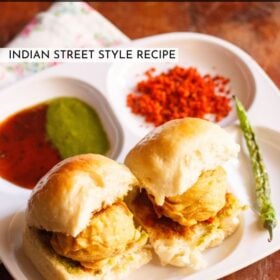
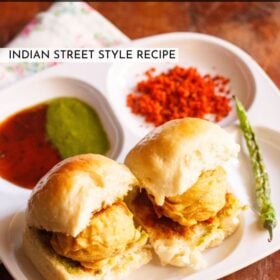
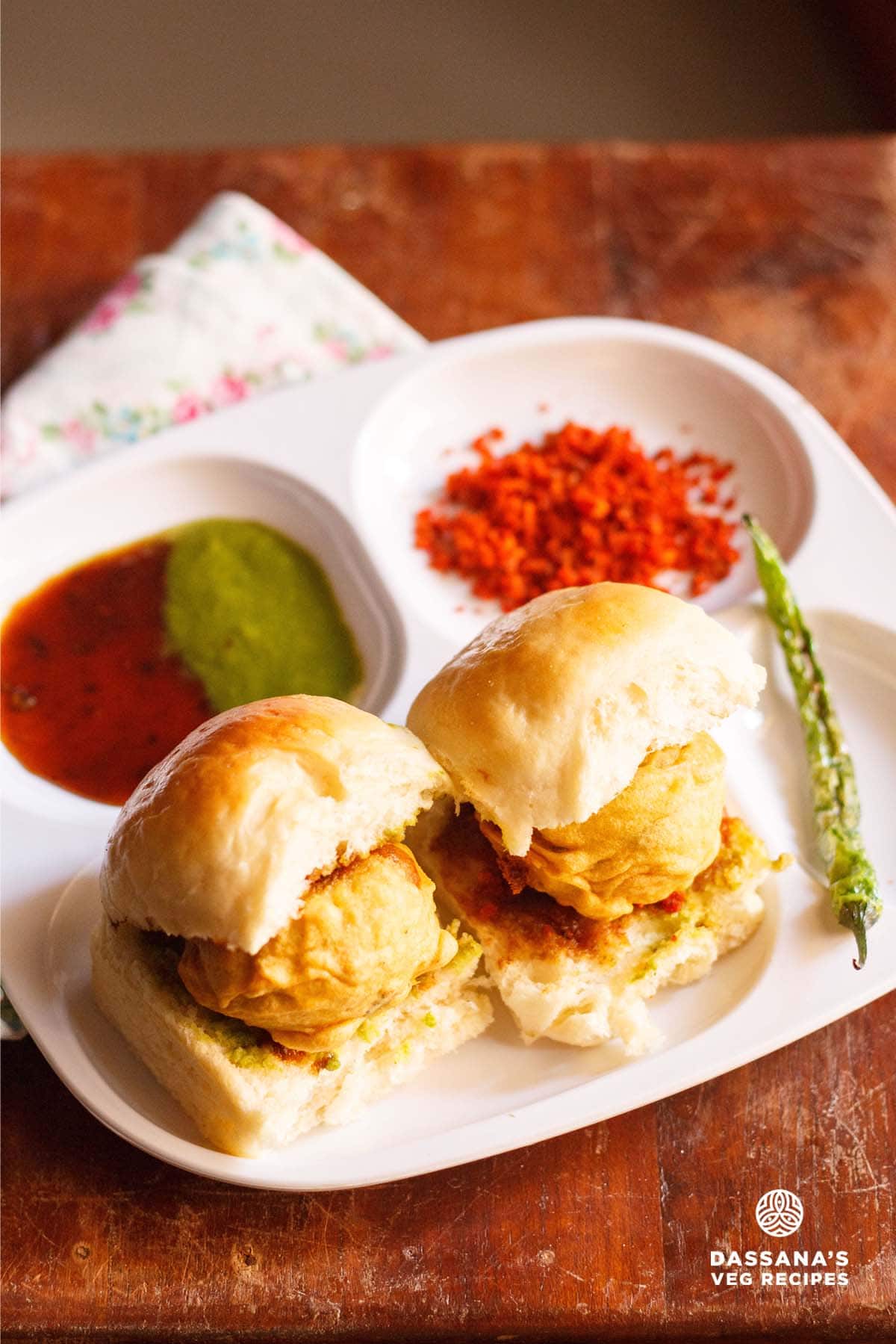
Vada Pav is one of Mumbai’s most loved street food snacks and a daily staple for the city. It consists of a spiced potato fritter coated in gram flour batter, deep fried until crisp, and served inside soft pav with chutneys. For readers unfamiliar with Indian street food, it is often described as India’s vegetarian answer to a burger, made with spiced potatoes instead of a traditional patty. Originally created as an affordable and filling snack, it quickly became popular across all sections of society.
Vada Pav: Origin, Ingredients & Variations
Vada Pav is a classic Indian street food made with batata vada and pav. Batata vada refers to a spiced mashed potato mixture shaped into balls, dipped and evenly coated with gram flour batter, and deep fried.
Pav is a soft Indian bread roll, closer in texture and taste to plain dinner rolls. When assembled with chutneys and the potato vada fritters, this combination becomes Vada Pav.
The word batata means potato in Marathi. The vada filling is prepared using boiled potatoes seasoned with spices, green chillies, ginger, mustard seeds, and curry leaves. The flavor is savory, lightly spiced, and comforting.
The outer coating of the vada is made with gram flour, also known as besan or hulled black chickpea flour.
Gram flour gives the vada a nutty taste and crisp exterior when fried correctly. The contrast between the lightly crisp shell and soft potato center defines a good vada.
Pav is slit horizontally but kept intact. It may be lightly toasted or used plain. The soft bread absorbs the chutneys and balances the spiciness from the vada.
Vada pav is made using five main elements: Pav, Batata Vada, Green Chutney, Tamarind Chutney, and dry Garlic Chutney.
I have shared the chutney recipes separately. You can click on the links above to make them at home, or use ready-made chutneys if preferred. You can make the pav at home or buy from a good bakery.
Although Vada Pav is strongly associated with Mumbai, its origins go back to the 1960s. It was created as a quick, filling snack for mill workers. Over time, it became one of the city’s most recognisable foods.
Many vendors sell their own variations of Vada Pav. These may include spinach vada, paneer vada, cheese vada, or mixed vegetable vada. Despite these changes, the core structure remains the same.
Vada Pav is often referred to as the poor man’s burger because of its affordability and filling nature. Despite this label, it is enjoyed by people from all backgrounds.
You can eat Vada Pav at any time of day. It works well for breakfast, brunch, or as an evening snack, especially with a cup of hot chai.
Throughout my childhood, I ate Vada Pav in many places in Mumbai and it was always so delicious.
Even today, I make sure to buy this snack whenever I visit Mumbai. When I am craving one and can’t get to the city, I make it at home, much like other Mumbai favourites such as Pav Bhaji, Pani Puri, Bhel Puri, and Ragda Patties that I often recreate in my kitchen.
Over the years, vendors have adapted the traditional recipe, adding ingredients like cheese, paneer (Indian cottage cheese), vegetables, or even Schezwan Sauce to suit different taste preferences.
If you enjoy Indian or Mumbai Street Food Snacks, you may also like:
How to make Vada Pav (Step-by-Step)
Make tasty vada pav with my step-by-step guide. I share how to make the potato vada in detail, while the green chutney and tamarind chutney recipes are included in the recipe card below.
Make Potato Stuffing
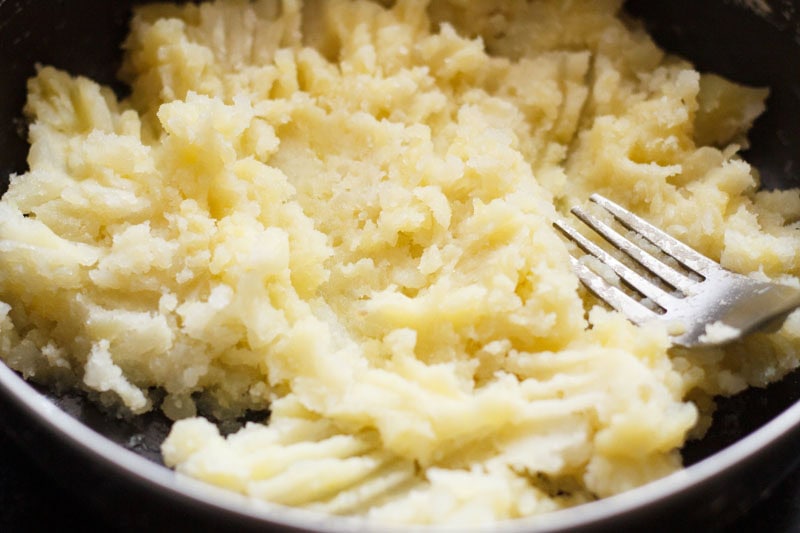
1. Boil 2 large potatoes that weigh about 350 grams. Peel and mash them with a fork in a bowl.
You can boil or steam the potatoes in a pan, Instant Pot or stovetop pressure cooker, adding water as required.
Remember to drain the water very well from the boiled potatoes before you mash them. Keep the potatoes aside to cool. When they become warm, peel and mash them with a fork or a potato masher.
Also, crush 6 to 7 small or medium garlic cloves and 1 to 2 green chillies in a mortar pestle.
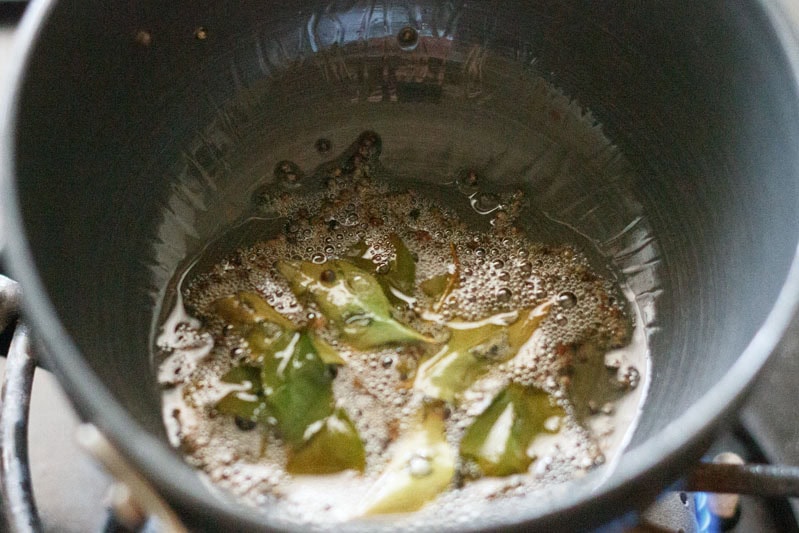
2. Heat 2 to 3 teaspoons oil in a small pan. Add ½ teaspoon mustard seeds and let them crackle.
Then, add 7 to 8 curry leaves and a pinch of asafoetida (hing). Stir and sauté on low heat for about 5 seconds.
3. Add crushed garlic cloves and green chillies mixture to the pan. Add ⅛ teaspoon turmeric powder (about 2 to 3 pinches).
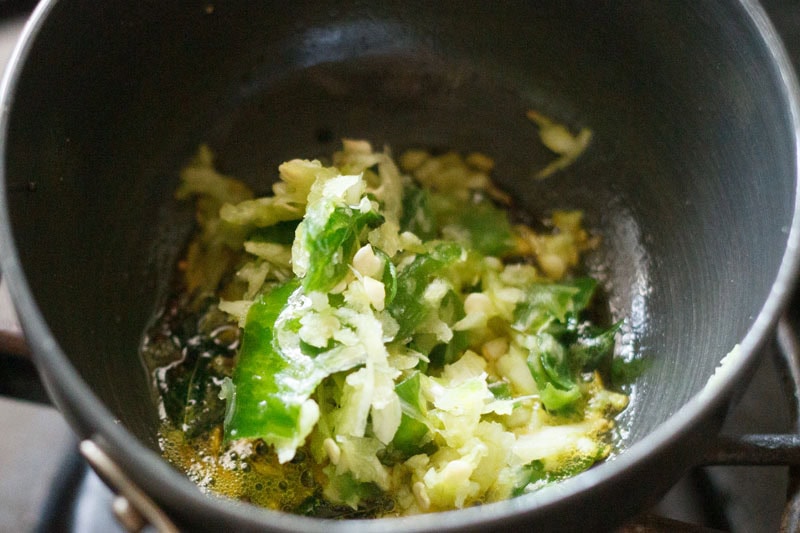
4. Stir on low heat for some seconds or until the raw aroma of garlic goes away.
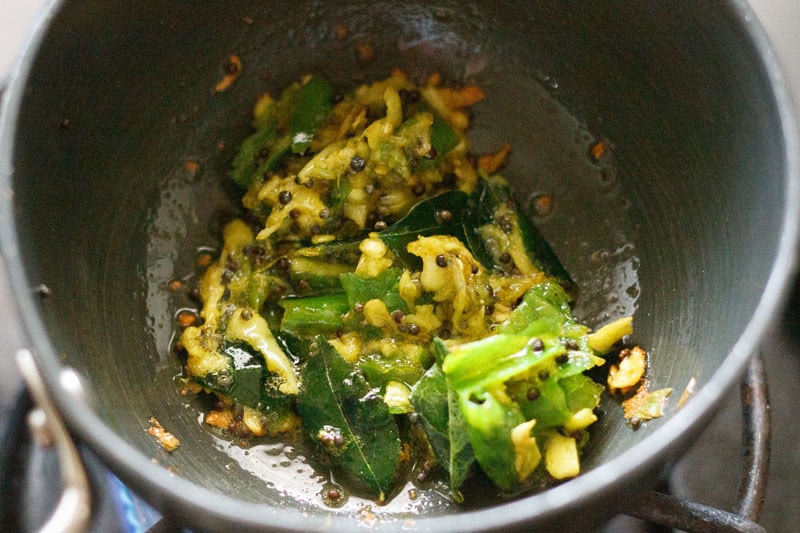
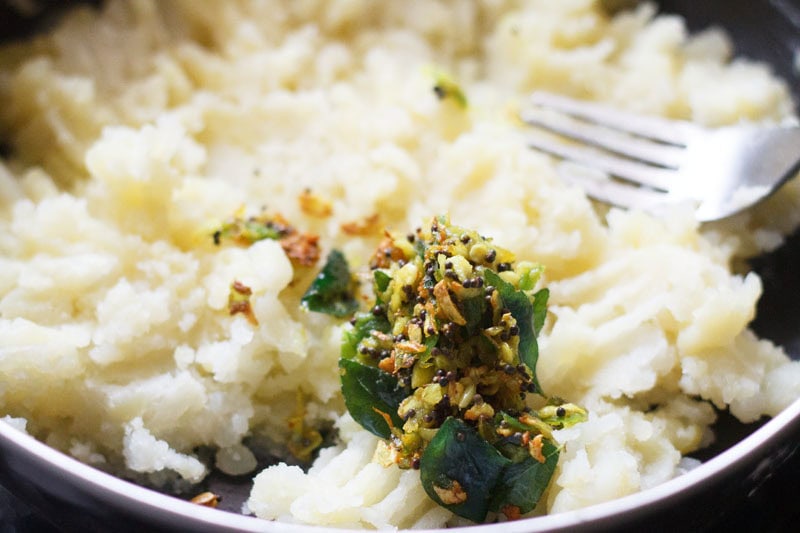
5. Pour this tempering mixture together with the oil on the mashed potatoes.
6. Add 1 to 2 tablespoons chopped coriander leaves and salt as required.
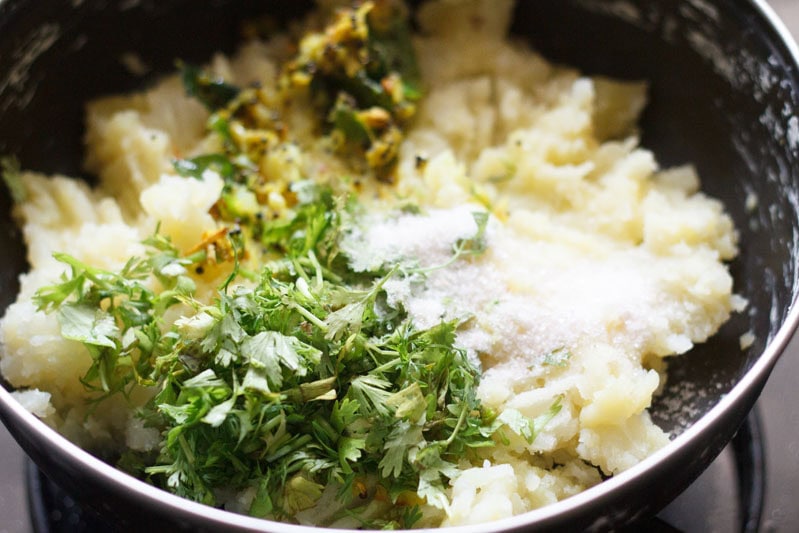
7. Mix everything well with a spoon. Do a taste test and if required, add more salt.
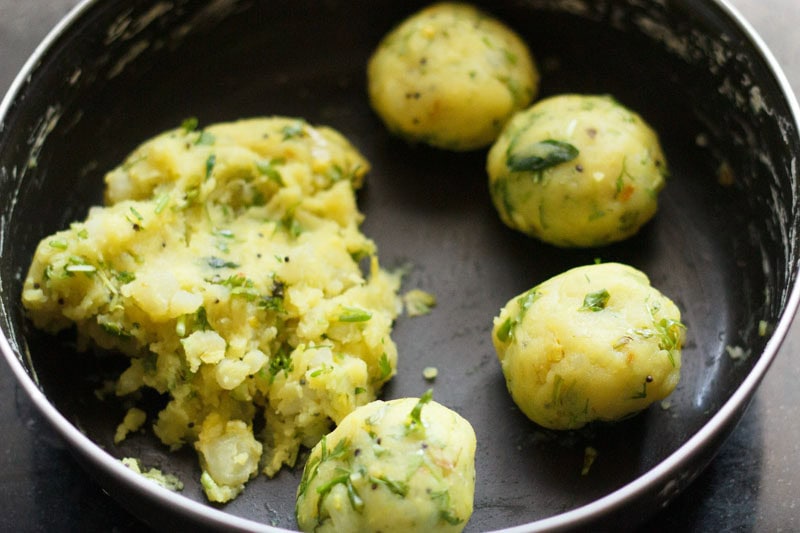
Then, make small to medium balls from the mashed potato mixture. Flatten these balls a bit. Cover and keep aside.
Make Gram Flour Batter
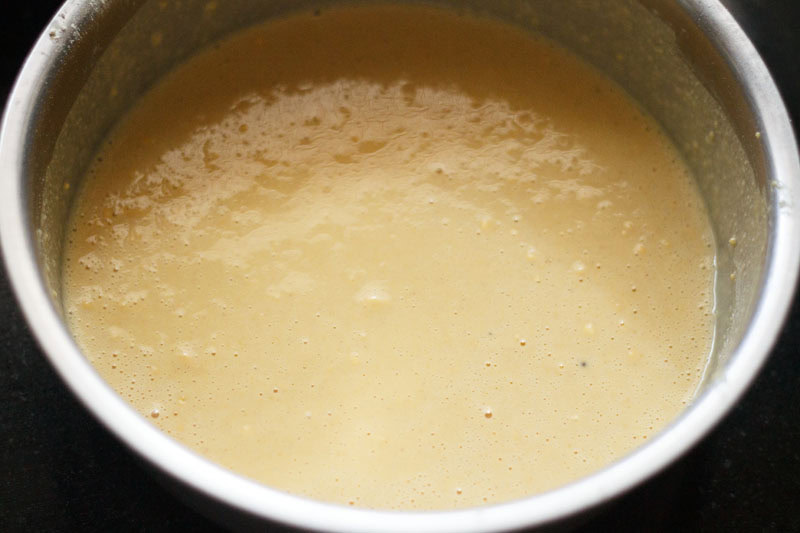
8. In another bowl, make a smooth batter from 1 to 1.25 cups gram flour (besan), ⅛ teaspoon turmeric powder (about 2 to 3 pinches), a pinch of asafoetida (hing), a pinch of baking soda (optional), salt according to taste and ½ cup water or as required.
The batter should have a medium-thick flowing consistency. It should not be too thick or thin.
Tip: If the batter becomes thin, add 1 or 2 tablespoons of gram flour. If the batter becomes thick, add 1 or 2 tablespoons water.
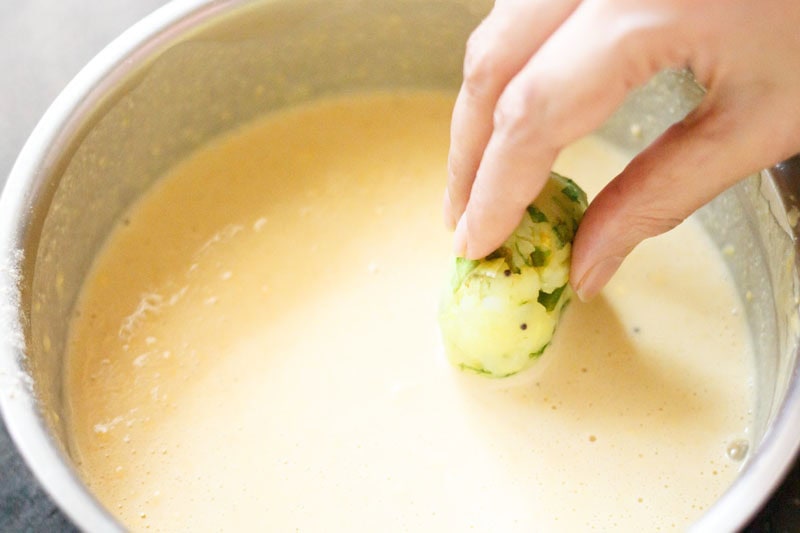
9. Dip the slightly flattened potato balls in the batter and coat them evenly with the batter.
Fry Vada
10. Before you dip the potato balls in the batter, heat oil in a pan or wok (kadai). When the oil becomes hot, dip the potato ball in the batter to coat as shown in the above step.
Carefully and gently drop these batter coated potato balls in medium hot oil.
Note: You can read more details on the frying temperature in the ‘My Recipe Notes’ section below.
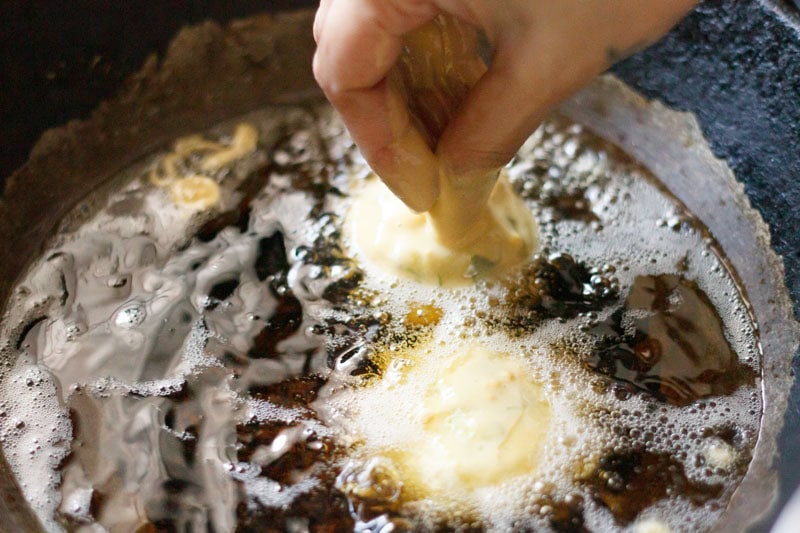
11. Depending on the size of the kadai or pan, you can add more or less of the vada while frying. But don’t overcrowd the pan
While frying the vadas, you can also fry green chillies if you like. Slit the chillies lengthwise before frying, as whole chillies can burst in hot oil.
If you prefer less heat, remove the seeds before frying. Use kitchen gloves while doing this, as the chilli pith and seeds can irritate the skin.
Fry the chillies until lightly blistered and golden, then toss with a little salt and set aside.

12. When one side firms up, becomes slightly crisp and golden, then only turn over gently with a slotted spoon.
Fry the second side. This way deep fry them till golden, turning over a couple of times as needed.
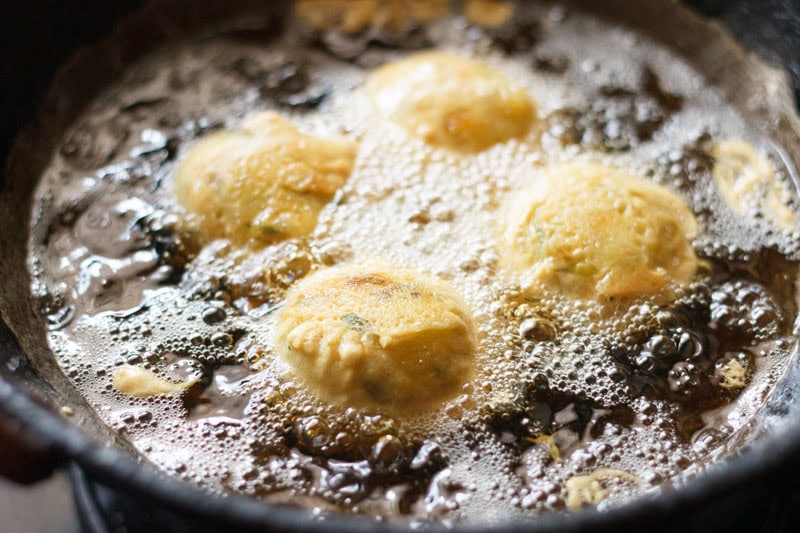
13. Place them on kitchen paper towels to absorb extra oil. Make all vadas this way in batches and set them aside.
If required, regulate the stovetop heat when frying the vadas.
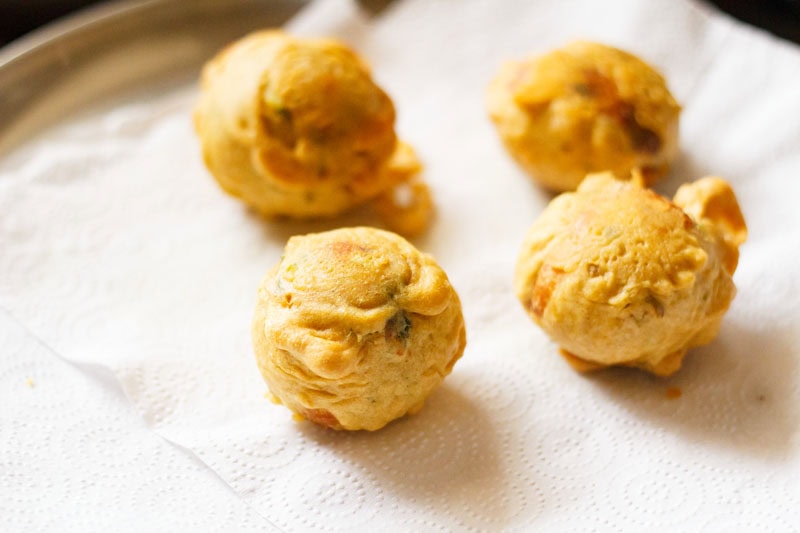
Assemble & Make Vada Pav
14. Serve them when they are still hot or warm. Place all the chutneys and pav on your work surface. Slice each pav from the center without breaking it and set aside.
If you don’t have tamarind chutney, make the Vada Pav with green chutney. The green chutney and sweet chutney recipes are mentioned in the recipe card below.
You can make these two chutney recipes some hours ahead or a day before and refrigerate.
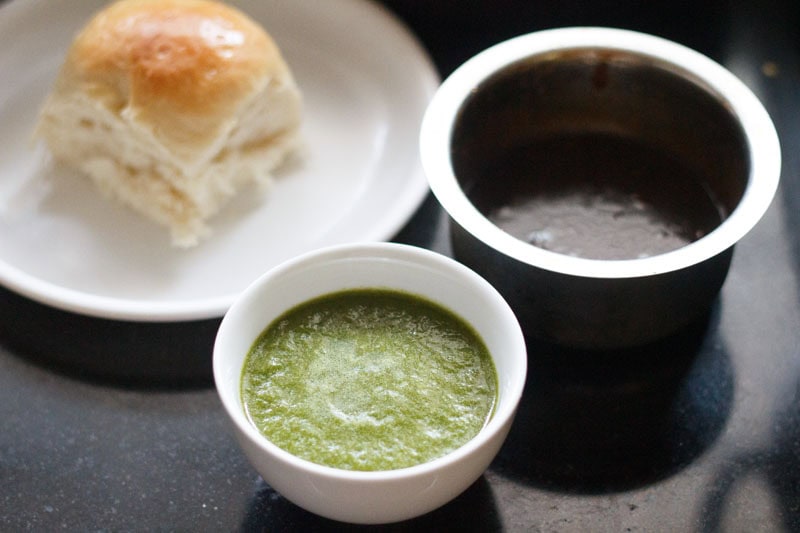
15. Spread both the green chutney and sweet chutney on the sliced pav. You can also spread green chutney on one side and sweet chutney on the other side.
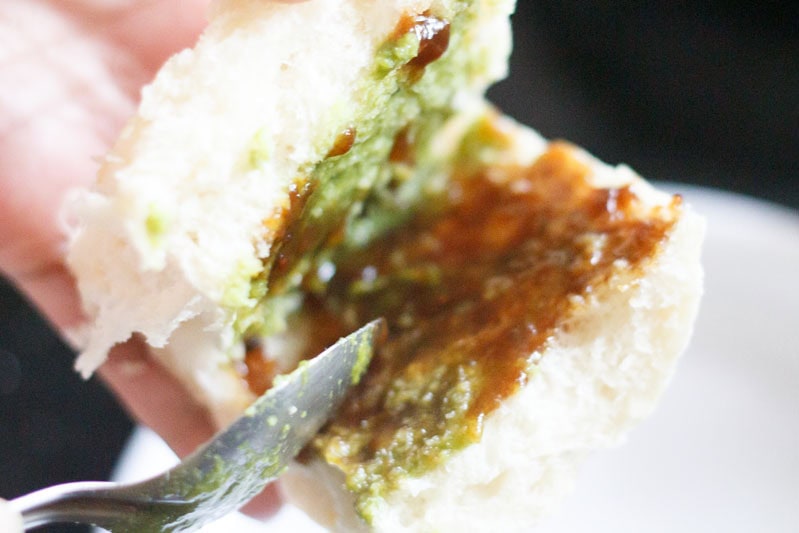
16. Sprinkle the dry garlic chutney on the pav. This step is optional and you can skip it, if you don’t have garlic chutney.

17. Place the hot vada between the pav slices.
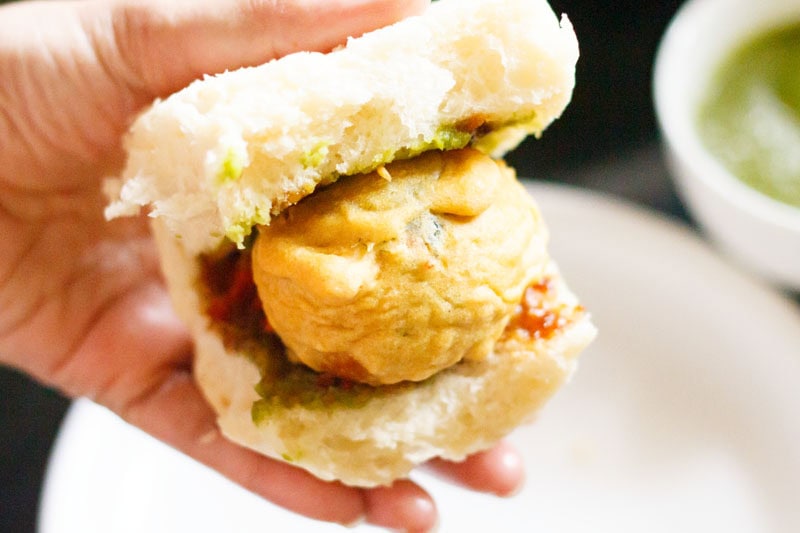
18. Serve vada pav immediately or else the pav becomes soggy. It makes for a good filling evening snack, high on carbs.
Serving Suggestions
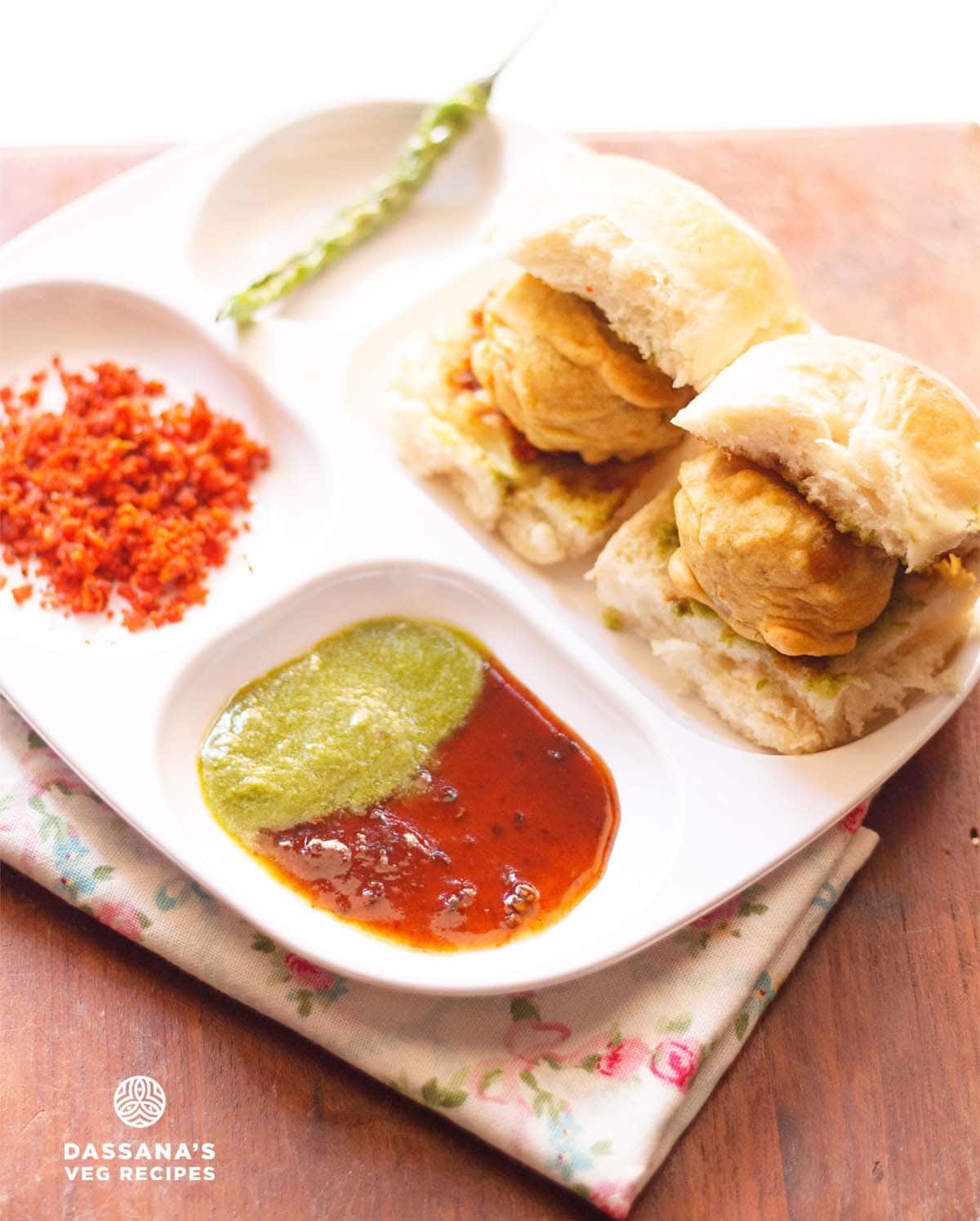
Serve vada pav hot with green chutney, tamarind chutney, and dry garlic chutney.
Fried salted green chillies and Masala Chai are classic accompaniments. Lemon wedges can be added for extra freshness.
You can also pair vada pav with Irani Chai, Ginger Chai or Cutting Chai. In some parts of Maharashtra, it is served with a spicy Coconut Chutney.
Storage
Only the potato vada can be refrigerated for up to 1 day and reheated before assembling. Pav should always be used fresh. Chutneys can be stored separately in the refrigerator for 2 to 3 days.
My Recipe Notes
- Adjust the spice level: The heat in vada pav comes mainly from green chillies and garlic chutney. Mumbai-style vada pav is usually moderately spiced, while some regions prefer it hotter. This recipe keeps the spice balanced. Increase the green chillies or garlic chutney if you like more heat.
- Use the right oil temperature: Fry the vadas in moderately hot oil at 180 to 190°C (360 to 375°F). Oil that is too hot will brown the vada quickly while leaving it undercooked inside. Oil that is too cool will make the vadas greasy.
- Test oil before frying: If you do not have a thermometer, drop a small amount of batter into the oil. It should rise gradually and start bubbling. If it sinks and rises slowly, the oil is too cool. If it rises immediately and browns fast, the oil is too hot.
- Do not overcrowd the pan: Fry the vadas in small batches. Overcrowding lowers the oil temperature and leads to uneven frying. This is especially important for beginners.
- Consistency of batter matters: The gram flour batter should be smooth and medium-thick. A very thin batter will not coat the potato properly, while a thick batter will result in a heavy outer layer. The batter should coat the back of a spoon without dripping too quickly.
- Mash potatoes while warm: Always mash the potatoes when they are still warm. This helps avoid lumps and gives a smoother filling, making it easier to shape the vadas.
- Assemble just before serving: Vada pav tastes best when assembled fresh. If kept for too long after assembly, the pav absorbs moisture from the chutneys and becomes soggy.
- Healthier alternative: For a lighter version, you can bake or air-fry the vada instead of deep frying. While the texture will be different from the street-style version, the flavors still work well.
Reader Questions
Who invented Vada Pav?
Vada Pav is believed to have been invented in 1966 by Ashok Vaidya at a stall outside Dadar railway station in Mumbai.
Can I find Vada Pav outside Mumbai?
Yes, Vada Pav is now popular across India and is also available in Indian restaurants in the UK, US, and other countries.
Is Vada Pav gluten-free?
No, Vada Pav is not gluten-free as pav is made with wheat flour. Gluten-free bread can be used as an alternative.
What goes well with Vada Pav?
Dry garlic chutney, green chutney, sweet tamarind chutney, fried green chillies, and masala chai pair best.
For spiced potato stuffing
For sweet tamarind chutney
Making tamarind chutney
- Soak tamarind in hot water for 30 to 40 minutes.
- With your hands, squeeze the pulp from the tamarind in the same bowl or pan. Strain the pulp and keep aside.
- Heat oil in a small pan. Lower the heat. Add cumin seeds and let them crackle.
- Add ginger powder, red chilli powder and asafoetida. Stir and add the strained tamarind pulp. Cook for 2 to 3 minutes.
- Add the jaggery (or sugar) and salt. Cook for 4 to 5 mins or more until the consistency thickens. Let the chutney mixture cool.
- When cooled, store the tamarind chutney in an air-tight dry jar or container.
- Refrigerate and serve the sweet chutney whenever required with chaat or snacks.
Making potato stuffing
- Boil or steam potatoes in an Instant pot, pressure cooker or pan until they are completely cooked and fork tender. Peel and then mash them with a fork in a bowl.
- Crush garlic and green chillies to a semi-fine paste in a mortar-pestle.
- Heat oil in a small pan. Add mustard seeds and crackle them. Then add curry leaves and asafoetida. Stir and fry for about 5 seconds.
-
Then add crushed garlic and green chillies paste, which have been crushed in a mortar-pestle. Add turmeric powder.Stir for some seconds until the raw aroma of garlic goes away. Do not brown garlic.
- Pour this tempering in the mashed potatoes.
- Add chopped coriander leaves and salt.
- Mix everything well and then make small to medium balls from the mashed potato mixture. Flatten these balls slightly. Cover and set aside.
Making batter
- In another bowl, make a smooth and thick yet flowing batter from the gram flour, turmeric powder, asafoetida, a pinch of baking soda (optional), salt and water.
-
The batter should not be very thick or thin. Tip: If the batter becomes thin, add 1 or 2 tablespoons of gram flour. If the batter becomes thick, add 1 or 2 tablespoons water.
- Set the prepared batter aside.
Frying Vada
- In a kadai or pan, heat oil for deep frying.
- When the oil becomes medium hot, then dip the slightly flattened potato balls in the batter and coat it evenly with the batter.
- Gently and carefully, add these batter coated potato balls in medium hot oil.
- Depending on the size of the kadai or pan, you can add more or less of the vadas while frying. Don’t overcrowd the pan while frying.
- When one side becomes crisp, lightly golden and firms up then gently turn it over with a slotted spoon and fry the second side. Turn over when the second side is fried.
- This way turning a couple of times fry the vada till they are evenly golden on all sides.
- Drain them on kitchen paper towels. Batter coat and fry all vadas this way in batches and set aside.
-
While frying the vadas, you can also fry green chillies if you like. Slit the chillies before frying, as whole chillies can burst in hot oil. Fry them until lightly blistered and golden. Toss the fried chillies with a little salt and set aside.
- When they are still hot or warm, you need to serve them. Take all the chutneys and pav on your work surface.
Assembling & Making Vada Pav
- Slice the pav or dinner rolls without breaking it into two and keep aside. If you don’t have sweet chutney, then just make the vada pav with green chutney.
- Spread both the green chutney and sweet chutney on the sliced pav. You can also spread green chutney on one side and sweet chutney on the other side.
- Sprinkle the dry garlic chutney. This is optional and if you don’t have you can skip it.
- Place the hot vada sandwiched between the pav or dinner rolls.
Serving Suggestions
- Serve vada pav immediately or else the pav becomes soggy. You can also serve some fried salted green chillies and both the chutney along with it.
- You can also serve them as an evening snack with a side of masala chai or coffee.
- You can always adjust the amount of chutneys you spread in the pav according to your taste and liking.
- The oil has to be medium hot when you fry the vada. If the oil is very hot then the outside batter will get browned and leaving the inside portion of the batter uncooked. On the other hand, if the oil is not hot enough then the vada will absorb a lot of oil making it soggy and loaded with oil.
- To make a spicy vada pav, increase the number of chillies in the potato stuffing. Or you can add more chillies in the green chutney that you make.
- This recipe can be scaled to make a big batch for a party or get togethers.
Calories: 296kcal | Carbohydrates: 47g | Protein: 7g | Fat: 9g | Saturated Fat: 1g | Polyunsaturated Fat: 1g | Monounsaturated Fat: 1g | Cholesterol: 1mg | Sodium: 824mg | Potassium: 221mg | Fiber: 4g | Sugar: 19g | Vitamin A: 187IU | Vitamin B1 (Thiamine): 1mg | Vitamin B2 (Riboflavin): 1mg | Vitamin B3 (Niacin): 12mg | Vitamin B6: 1mg | Vitamin C: 26mg | Vitamin E: 3mg | Vitamin K: 8µg | Calcium: 96mg | Vitamin B9 (Folate): 132µg | Iron: 5mg | Magnesium: 25mg | Phosphorus: 58mg | Zinc: 1mg
Vada Pav recipe from the blog archives was first published on August 2009.